Posts

AI Toys and the Cost of Childhood: Will Imagination and Innocence Be the Trade-Off?

Image
  Child playing with simple toys Just yesterday, I read in the news that OpenAI—the company behind ChatGPT—is now joining hands with toy-maker Mattel. Yes, the same Mattel that gave us Barbie and Hot Wheels. As I read it, I smiled, thinking of my own childhood. I used to love playing with Barbie, and those tiny Hot Wheels cars were so much fun. Now, it seems those very toys will come with AI inside them. I still remember how my sister and I would spend hours making up stories around our dolls. Our imagination would run wild. The toys themselves were simple, but the worlds we created were magical. Children love toys, no doubt. But they don’t really need fancy, high-tech ones. They can play with almost anything—a spoon, a piece of cloth, a cardboard box—and turn it into something special. For them, everything is a toy if it helps them imagine. Toys may look like small things, but they play a big role. They help shape who a child becomes. Think about your own childhood. Was it a soft ...

Part 2: The building blocks of a Prompt – What Goes Into a Good AI Instruction

Image
Components of a good prompt. Image by Rajashree Rajadhyax This is the second article in the three-part series on prompt engineering. In the first part, we explored various prompting techniques—different ways you can instruct AI to generate responses. The article introduced some theoretical approaches to interacting with AI, highlighting how different techniques influence the kind of output you receive. You can read the first part [here]. In this part, we’ll shift our focus to the building blocks of a prompt—the essential elements that make up a clear, effective instruction. Let’s revisit what a prompt is At a basic level, a prompt is simply the way you tell AI what you expect from it. It’s your way of saying, “Hey, here’s what I need—please respond accordingly.” But while it may seem as simple as typing a question, what you say and how you say it can drastically influence the output you get. This is because AI models, like LLMs (Large Language Models), understand prompts by recognizing...

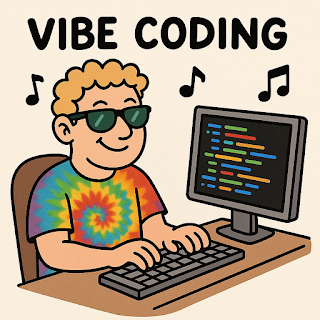
Vibe coding: How AI Is Bringing the Vibe to Software Development

Image
A new term that’s been making waves lately is vibe coding . Simply put, vibe coding is about using LLMs (Large Language Models) to help you write code. The term was coined by Andrej Karpathy , a co-founder of OpenAI and former AI leader at Tesla, in February 2025. The idea behind vibe coding is simple: instead of manually writing every line of code, programmers can describe what they want in natural language, and an AI model generates the working code for them. Karpathy summed it up perfectly when he said, "The hottest new programming language is English." His point? With LLMs advancing rapidly, we may not need to learn programming languages in the traditional way — we can just tell AI what we want, and it will handle the rest. So, vibe coding is when you tell a computer, in plain English (or any other language you speak), what kind of program you want — and the computer writes the code for you. Let’s say you want a program that sends an email. Instead of writing the whole ...